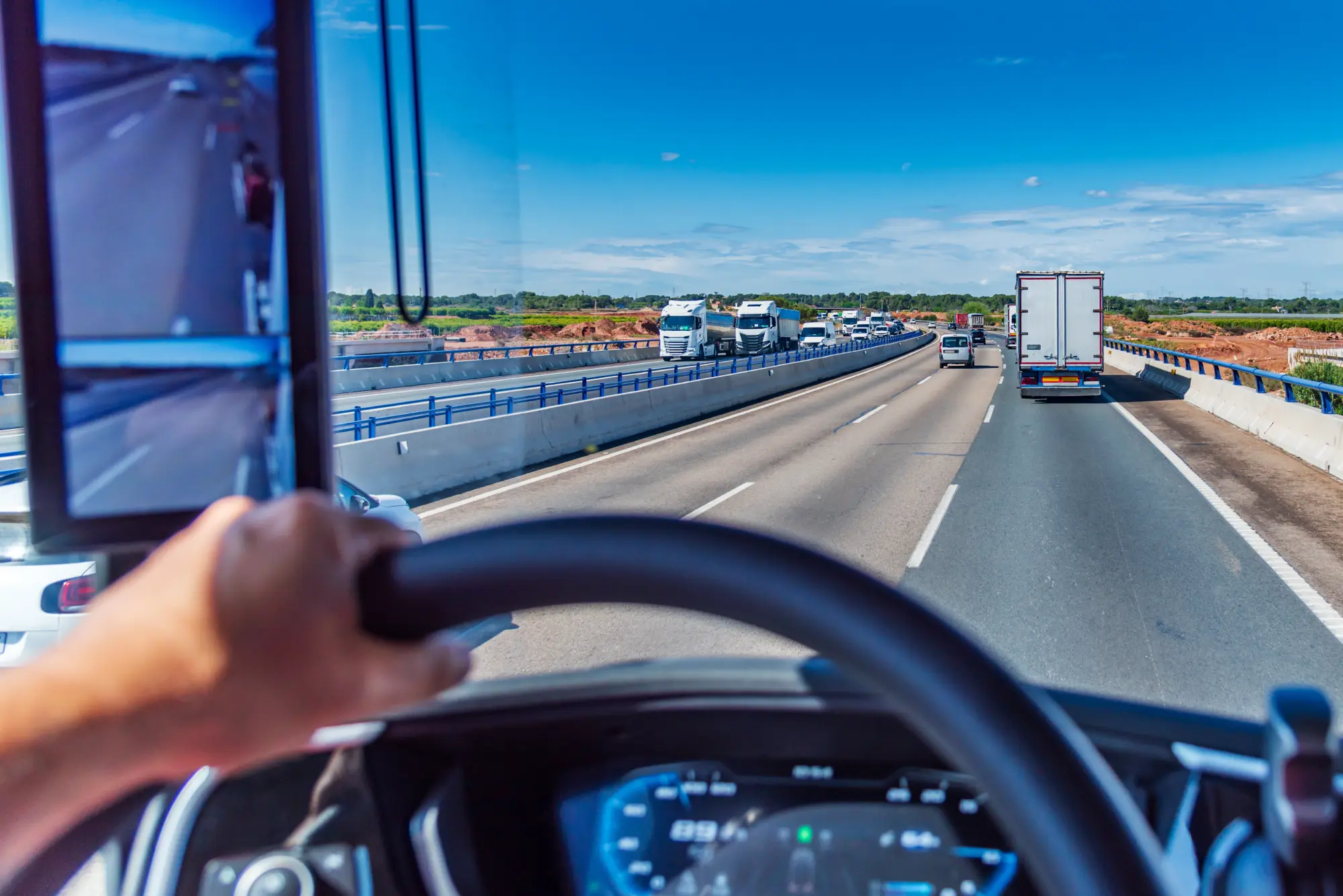
A truck driver may be an employee of a trucking company, an owner-operator working under a carrier’s authority, or an independent carrier operating under its own authority. Those relationships can affect which individuals and businesses may be legally responsible for a crash, and which insurance policies may be available to compensate an injured person.
This distinction can be especially important on Houston-area freight corridors, where commercial trucks regularly travel I-10, I-45, US-59, the 610 Loop, and the Grand Parkway. When a crash involves a tractor-trailer, determining who employed the driver, who owned the equipment, who dispatched the truck, and who was responsible for its operation can require a detailed investigation.
If you or someone you love was injured in a Texas truck accident, don’t assume the driver is the only person who can be held responsible. Call Amaro Law Firm at (713) 999-4674 for a free consultation with a Houston truck accident attorney. An early investigation can help identify the potentially responsible parties and preserve evidence before it disappears.
How Does a Company Driver Differ from an Owner-Operator?
A company driver generally drives a commercial vehicle owned, leased, or controlled by a trucking company and works as that company’s employee. The company typically controls important aspects of the driver’s work, such as assignments, schedules, training, and company policies.
An owner-operator, by contrast, typically owns or leases the truck and operates it as an independent business. But that doesn’t necessarily mean the owner-operator works completely independently of a larger trucking company. An owner-operator may haul freight under their own motor carrier authority or operate under the authority of another carrier through a lease or other contractual arrangement.
Additionally, an owner-operator might own the tractor but be hauling a load for a larger carrier under that carrier’s authority. The carrier’s name, USDOT number, lease agreement, dispatch records, insurance policies, and operational responsibilities may all become relevant when determining liability.
In short, identifying who owned the truck is not enough to determine who is liable in a truck accident — these situations are often far more nuanced.
Why Does the Trucker’s Employment Status Matter?
Employment status can affect both who may be sued and which legal theories may apply.
If a company employee causes a wreck while performing his or her job, the employer may potentially be held responsible for the employee’s negligence under the doctrine of respondeat superior. Texas law also contains specific rules governing employer liability in commercial vehicle cases.
Depending on the circumstances, a truck accident claim may involve allegations of:
- Driver negligence: Speeding, distracted driving, unsafe lane changes, following too closely, or failing to yield.
- Fatigued driving: Violating hours-of-service requirements or allowing a driver to operate while dangerously fatigued.
- Impaired driving: Operating a commercial vehicle while impaired by alcohol or drugs.
- Negligent hiring or retention: Putting an unqualified or unsafe driver behind the wheel.
- Inadequate training or supervision: Failing to properly train, supervise, or monitor a driver.
- Negligent entrustment: Allowing someone to operate a vehicle despite knowing or having reason to know the person posed an unreasonable risk.
- Maintenance failures: Failing to properly inspect, repair, or maintain the truck or trailer.
- Cargo-loading failures: Improperly loading or securing freight when that contributes to the collision.
Not every theory applies to every case. Texas law also places important limitations on certain claims involving motor carriers, which is another reason the specific employment and operational relationship needs to be investigated rather than assumed.
Owner-operator cases can present different questions. The owner-operator may be personally responsible for negligent driving, while a separate motor carrier may also be relevant depending on the contractual and operational relationship.
In other words, the label attached to the driver’s job isn’t necessarily the end of the liability analysis.
How Does Employment Status Affect Compensation?
The importance of identifying potentially responsible parties becomes even clearer when a truck crash causes catastrophic injuries.
Victims may face extensive medical treatment, lost income, permanent disabilities, and other substantial damages. Depending on the circumstances, potentially responsible parties could include:
- The truck driver
- An owner-operator
- A motor carrier
- The company that owns or leases the truck
- A trailer owner
- A shipper or loading company
- A maintenance or repair company
- A freight broker or other intermediary
- A manufacturer of a defective component
The existence and availability of insurance depends on the specific parties and circumstances. That’s why a truck accident investigation should focus on identifying all potentially responsible parties and applicable insurance coverage, rather than simply accepting the first explanation provided by a trucking company or insurer.
How Do Freight Companies and Insurers Try to Avoid Liability?
After a truck wreck, the trucking company and its insurer may have a financial incentive to limit their responsibility for the crash. One common tactic is to emphasize the driver’s status as an “independent contractor” or owner-operator and argue that the carrier should not be held responsible for the driver’s conduct.
Another tactic is to point to the company that technically owned the truck or trailer and suggest that another business (not the carrier involved in transporting the freight) is responsible. Multiple companies may have roles in a single shipment, which can make it difficult for an injured person to immediately determine who was actually responsible for the driver’s conduct, vehicle, or cargo.
Insurers may also attempt to shift attention toward the injured driver. They may argue that the crash was caused partly or entirely by speeding, distracted driving, an unsafe lane change, or another alleged mistake by the passenger-vehicle driver. Even when the truck driver clearly contributed to the collision, these arguments can be used to reduce the amount an insurer is willing to pay.
These tactics are one reason it can be disadvantageous to accept an insurer’s initial determination of who is responsible. The trucking company’s description of its relationship with the driver is not necessarily the final word on liability. An experienced truck accident attorney can investigate those issues and determine which parties may have legal responsibility before accepting the trucking company’s or insurer’s explanation of what happened.
Why You Need a Truck Accident Lawyer Who Can Act Quickly
Truck accident evidence can disappear, be overwritten, or become much harder to obtain as time passes. Electronic data may be subject to retention periods. Video footage can be overwritten. Trucks can be repaired or returned to service. Witnesses’ memories can fade. And important contracts and records may be held by multiple companies located in different places.
That is why an attorney investigating a serious truck wreck may need to move quickly to identify the parties involved and send preservation demands for relevant evidence. A thorough truck accident investigation may need to determine:
- Who employed or contracted with the driver?
- Who owned the tractor and trailer?
- Under whose motor carrier authority was the truck operating?
- Who dispatched the driver?
- Who hired the carrier or arranged the shipment?
- Who loaded and secured the cargo?
- Who was responsible for maintenance?
- What insurance policies potentially cover the crash?
- Did the driver or any company violate applicable safety requirements?
- Did any corporate practice contribute to the collision?
For Houston-area crashes, that can be particularly important because the region is one of the country’s major freight hubs, with commercial traffic moving through a dense network of interstate highways, port routes, industrial areas, and distribution corridors.
Truck Accident Cases Are Rarely Simple. Don’t Wait. Call Amaro Law Firm Today.
After a collision with an 18-wheeler or other commercial truck, it can be tempting to focus exclusively on the driver who was behind the wheel. But the driver’s employment status may tell only part of the story.
A company driver, an owner-operator, a leased driver, and a carrier operating under someone else’s authority can create very different liability questions. And the answer may not be obvious from the police report or the logo on the truck.
If you were seriously injured in a Texas truck wreck, talk to a truck accident attorney before assuming you know who is responsible. Contact Amaro Law Firm online, or call us at (713) 999-4674 for a free consultation. The firm represents people injured in commercial truck crashes throughout Texas and can investigate the driver, motor carrier, truck owner, insurers, and other potentially responsible parties.